Meet the Meteorologist
What's your favorite weather phenomena?
What got you interested in the weather?


Plastic has become an essential part of modern life, but its durability comes with a major environmental cost. Many disposable plastic products, such as food packaging and single-use items, are used for only minutes or hours before being discarded. Yet, the material itself can persist in the environment for decades or even centuries, gradually breaking into microplastics.
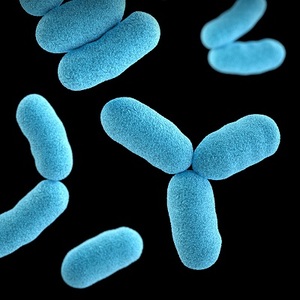
Researchers are now investigating a new approach that could fundamentally change how some plastics are designed. Instead of relying on external recycling or slow natural degradation, scientists have created a "living plastic" that contains dormant bacteria capable of breaking the material down from within when activated.
Many microorganisms naturally produce enzymes that break long polymer molecules into smaller pieces. Since plastics are made from polymers, scientists have long explored using these enzymes to help degrade plastic waste. Instead of adding purified enzymes alone, the research team embedded dormant spores of the bacterium Bacillus subtilis directly into the plastic.
To improve the breakdown process, the bacteria were engineered to produce two different enzymes that work together. One enzyme first cuts the long polymer chains into shorter sections, while the second enzyme breaks those fragments into their basic molecular building blocks.
The team mixed the bacterial spores into polycaprolactone, a biodegradable polymer commonly used in applications such as 3D printing and some surgical sutures. The resulting material remained durable and functional while the bacteria stayed inactive.
When the researchers were ready to trigger decomposition, they exposed the material to a nutrient solution heated to 122 degrees Fahrenheit (50 degrees Celsius). The spores became active and began producing the two enzymes. Within six days, the plastic had completely degraded into its original building blocks.
Because the enzymes acted in sequence, the material was broken down efficiently rather than fragmenting into tiny plastic particles. As a result, the process avoided producing microplastics, one of the most persistent environmental problems associated with conventional plastic degradation.
The researchers believe the technology could eventually be used for products that only need to remain intact for a limited period before safely degrading. Future work will focus on developing activation methods that function in water, where large amounts of plastic pollution accumulate, and adapting the approach to other commonly used plastics. If successful, living plastics could offer a new way to reduce long-term plastic waste while maintaining the performance needed for everyday products.





 Paul Trambley
 Derek Heit
 Jennifer Wojcicki
 Laura Lockwood
 Ray Miller


